Jasmine Christie

Jasmine Christie (also known as ANTICHRISTIE) is an analogue digital artist who has exhibited across the United Kingdom and internationally in Athens, São Paulo, and Barcelona. Recent exhibitions include Arrival Gallery in Athens, Artlymix in São Paulo, Galería Agaphe in Barcelona, IMPREINT Space in London, Fabric Studios in Liverpool and The Holy Art Gallery in Paros Island, Greece.

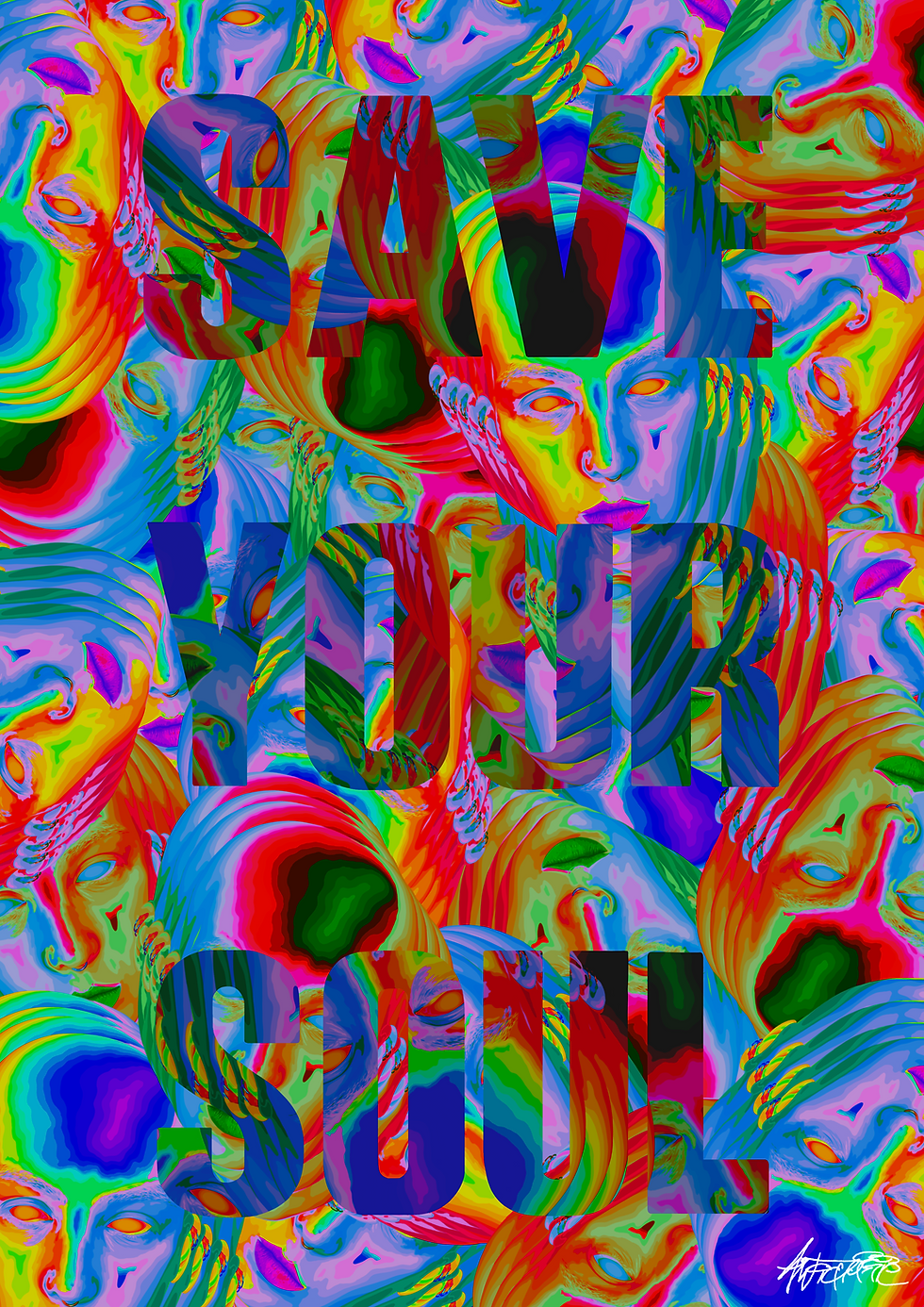
Utilizing an aesthetic reminiscent of Vaporwave, New Wave, and Synthwave elements along with her own expressions based on Rave culture, Jasmine Christie creates elaborate illusions which are cool, mesmerizing, hypnotic, and hallucinogenic. Created in Procreate, the analogue digital artworks are assembled and collaged like a kaleidoscope and sometimes incorporating the use of conceptual texts. These works are digital realms or portals into a world where distortions are based on reinterpretations of gothic, antiquity, pop culture motifs, and Rave lifestyles. Ominous warnings with vivid colors and hazy electrical interference implore the viewer to “watch your back” and “save your soul”. The blurs and pastel neon color schematics within the works induce a grand sense of hallucination amidst a customized genre created by Jasmine Christie where authority is based on fun, enlightenment comes from lucid experiences, and freeing our mind derives from entering chasmic and cataclysmic visual portals of ecstasy.

These stunning and hyper-stimulating visual works are a testament to how analogue digital art can enhance experiences and alter reality in genuinely human-interpreted ways beyond mere familiar methods of illusion such as painting, drawing, or sculpture. Even the digital works based on antiquated sculptures, such as of Alexander the Great, are based on enhancing the visual reinterpretation of the artform rather than expressing a visual representation. In this kaleidoscopic world, we are transported through a culture of partying, celebration, and jubilee which seems as an experience which is decadent yet authentically riveting. Such new encounters further expressed in the motion blurs of Vaporwave, New Wave, and Synthwave aesthetics has the viewer contemplate on digital realms invented not only for our pleasure, but also to embark on new experiences. Much like entering a lightning storm with immense electrical interference or losing ourselves in a hypnotic film or video game, the digital works of Jasmine Christie alter our state of mind in seemingly uncanny and curious ways.

Disco Ball (pictured above) depicts an element of Rave and party culture beyond distorted to melt before the viewer’s very eyes. The way the disco ball seems to digitally melt in front of the audience seems to shape the form of a human brain. Amidst a dark monochromatic background and centralized composition, the pop-art-like effects of Disco Ball reflects an ominous undertaking in living the psychedelic experiences of partying the night away in today’s urban centers. The piece is a freeing of the mind, a reflection of continuity of the subconscious beyond mere abstractions and indirect connotations.

Containing an astonishing portfolio which reflects deep sensitivities to the interpretative nature of the mind, the digital works and realms of Jasmine Christie explore and implore the use of portal-like configurations and referencing various figures from authoritative to historical in order to have us reevaluate history in a contemporary context. These conceptual illuminations of the mind, through texts, motion blurs, and lucid colors, reveal compositions which are drenched in luminosity, illusory animated suspension and invoke fields of distortions interfering and enhancing our social and psychological conscious. Such innovative works by Jasmine Christie bring to the forefront how digital manipulation can be used as a high artform beyond elements of design and automation. Jasmine Christie taps the collective and individual conscious of our innermost desires and impulses regarding manic experiences and willingness to move beyond familiarity and our conceptions of reality.