Pauline Galiana V. 2

Pauline Galiana is an installation, assemblage, and video artist who has exhibited particularly across the Northeastern United States. Recent exhibitions include International Drawing Space, A Space Gallery, LES Ecology Center, Artspace, Sojourner Gallery, Human Impact Institute, and Westbeth Gallery in New York, The Puffin Cultural Forum in Teaneck, New Jersey , Town Hall Community Center Gallery in Randolph, New Hampshire, and Kay Daugherty Gallery in Solomons, Maryland.

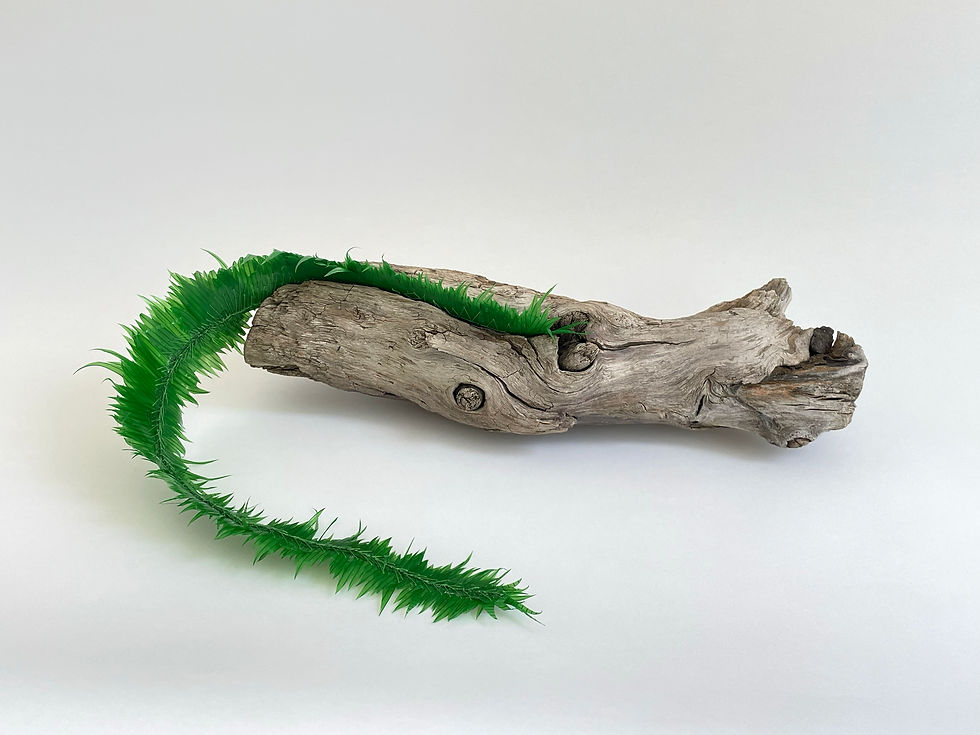
Fantastic and Fantastic Blooms are two similar sets of series which both deal with the themes of ecology and conservation but differ in execution as Fantastic is based on recycled material assembled into a fiber while Fantastic Blooms are installations containing tree limbs and plastic. In Fantastic, the fiber installations are meant to be displayed in a variety of ways such as a standard (much like a flag), as an assembled maze to be captured on video, and as crumpled up experimental sculptures. The fluidity of form is meant to convey fiber as an installational element rather than a piece of two-dimensional art. Fantastic Blooms on the other hand is more impermanent in nature. These specific pieces behave more like performative assembled objects rather than permanent works of art. Their frail assemblage of flimsy plastic delicately attached to pieces of rotting twigs and tree limbs or even affixed to fungus reveals works heavily reliant and vulnerable to aspects of erosion and decay. The various pieces of plastic which literally represents pieces of trash such as plastic pins for bread bags or broken jar caps are assembled much like a piece of floral or fungus onto fragile bark of rotting tree parts.
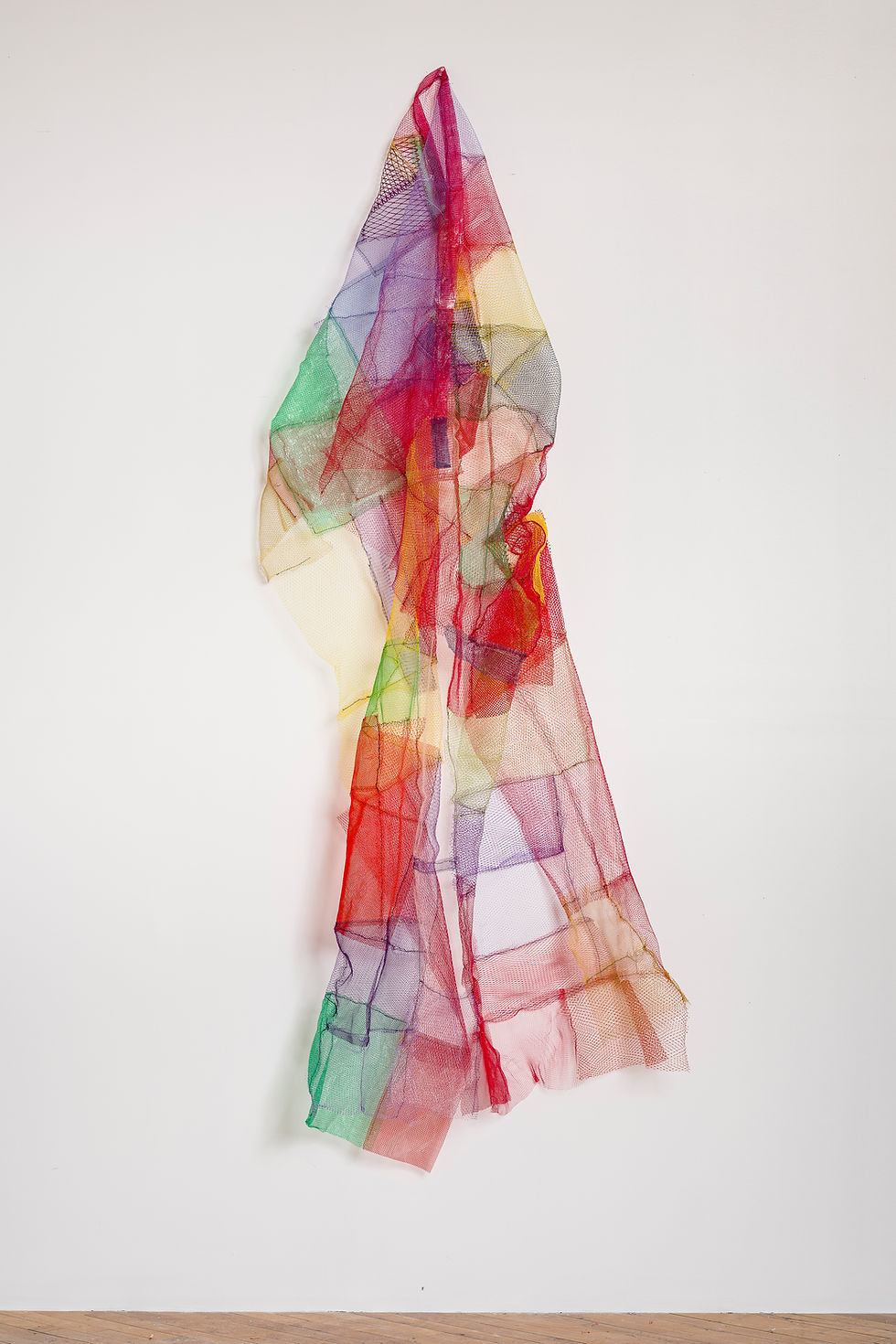
Both of these sets of series speaks to the dichotomy between human-created synthetic structures along with the fragility of the natural world. Much of the plastics use in the artworks are not biodegradable and yet become affixed upon fragile rotting foliage vulnerable to erosion. The Fantastic series contrasts with the laws of nature for being geometrically patterned, representing civilization yet displayed amidst natural environments and in various forms reflecting an organic quality as indicated in the photos with this article. Fantastic Blooms represents a standard as well but not in a literal sense. Rotting tree barks become a symbol of the fragility of nature while the plastic behaves as a sort of leeching element, an invasive parasitic substance invading the space of the wood. Such concepts become indicated because the wood is revealed in natural form while the plastic seems to seep into the structure which appears unnatural yet imitates the organic forms of the naturalistic structure.

F. Blooms V. 3 (pictured above) seems to depict some tree bark becoming punctured by what appears to be acupuncture needles. Such a depiction reveals traditional medical devices used to ‘heal’ the wood, yet at the same time behaving as an invasive parasitic substance. Much like the cause of humanity as civilization often behaves with good intentions towards nature only to end up exploiting the natural world through the demands of industrialization.

These two sets of series, Fantastic and Fantastic Blooms, communicates the need for humans to take a noncynical approach to conservation and ecology even though the art is expressed in a cynical manner. The ‘irony’ becomes the absurdity of trying to recycle non-biodegradable trash into art while representing them in their true invasive forms. Through recycling and reclamation the artist hopes to encourage other creators to nourish our environments not only philosophically but also literally by ‘doing no harm’ to the environment with the creation of art. With an investigative approach towards sustainability and how artistic research advances causes of reclamation, Pauline Galiana discovers a connection with nature which is both conceptual and substantive through process and performative fragility. As an artist she explores the roles of human impact and how conservation and ecology play a role in our lives as well as revealing the importance of preserving natural elements.