
Performance: La Niña De La Casa by Fina Ferrara

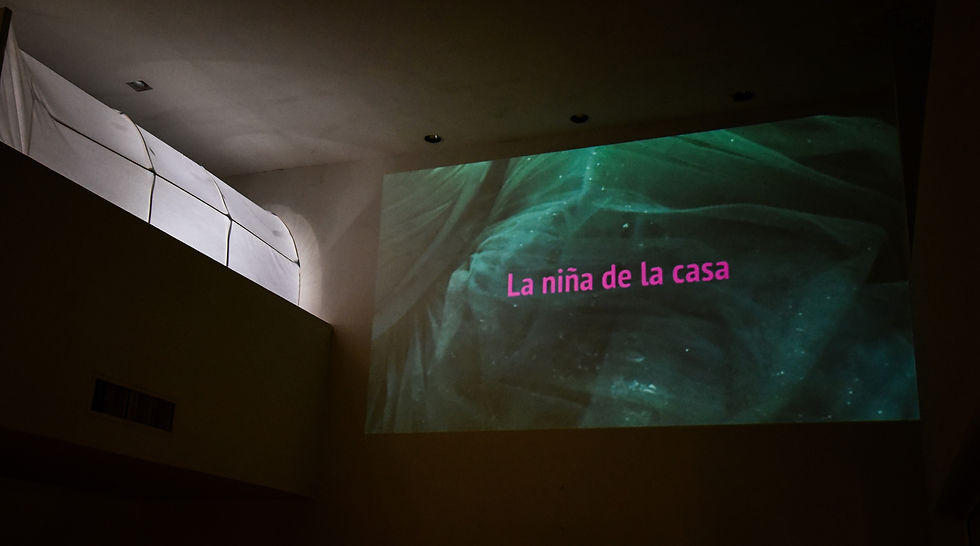
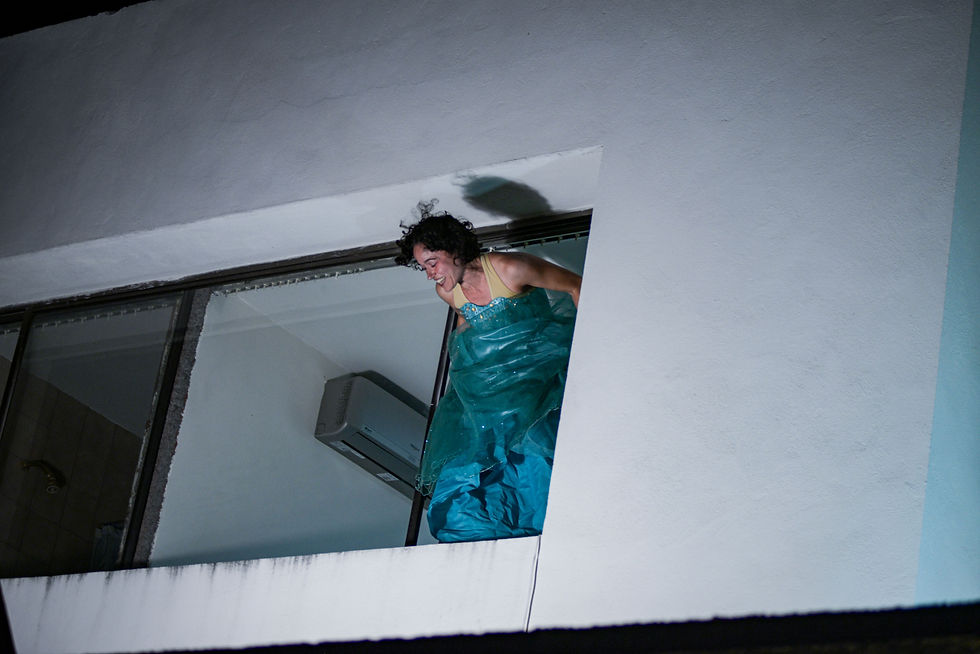
La Niña De La Casa, or The Girl in the House when translated to English, is a performance by Fina Ferrara which begins with a prelude to another performance titled Heartwork broadcasted to the audience. Heartwork entails Fina seated on the grass in a white gown stitching red thread through animal hearts in the mists of an ominous forest to spell the word ‘trust’. The theme of certainty in others becomes followed by Fina Ferrara being broadcasted to the audience live on a screen with a turquoise dress and engaging with a toy doll. A short time after, Fina breaks the fourth wall of the narrative by directly acknowledging the audience in the facility and proceeds to jump out of a balcony window. Fina then swings helplessly and joyfully from the bottom column of the balcony until she finally falls into a swimming pool within the courtyard.

Fina Ferrara emerges from the pool and unsheds her turquoise dress revealing a sporting outfit. Drenched in water, she begins entering the interior of the facility and proceeds to posture to various members of the audience as if seeking for them to engage with her. The audience members seem to react in a sense of bewilderment and surprise rather than through direct engagement. Finally, Fina enters a makeshift installation of a tent with her fists full of blood (or red paint symbolizing blood). She tears the tent with her bare hands, splashing and dripping blood in the cavity as well as into the interior of the tent installation. Smearing blood-stained handprints onto the walls of the tent, Fina becomes isolated away from the audience who are unaware of the situation, which in turn, reinstates the fourth wall. She then emerges from the blood-soaked tent, grasping the exterior of the cavity entrance with her blood-stained arms and hands, then the performance ends.

The concept of the performance is based on self-confidence, loss of innocence, and being unable to connect with others due to a lack of inner-trust. Failing to successfully engage with the audience as well as isolating herself away from them in the tent installation was part of the conceptual notion of seeking to be left alone in order to reflect on life experiences and inner-reflection on her state of mind and consciousness. Through evocative actions and emotions, the performance asks the audience if they can regain the inner trust of their truth, the sincerity within us which is not part of collective identity or social constructs. The artist becomes left alone in the tent away from the audience to ponder upon herself away from outside influence. In essence, the performance expresses the innocence and purity of childhood through the playful engaging with a toy doll to jumping out of a second story window into a pool. A child acts upon their sincere heartfelt feelings, something which is lost in adulthood, as conveyed in the performance.


Through abstraction and subconscious psychoanalysis, the performance breaks the dimensions between reality and illusion. The illusory qualities is the projection on the screen, when Fina Ferrara breaks the fourth wall, she blends reality with fiction. As an actor, she attempts to engage with the audience for them to react in synchronization to her contemporary dance posture and emotional motions. Predictably, the viewers become confused and shy away from direct engagement because to them the performance and actor is the ‘other’. La Niña De La Casa is a performance which attempts to shatter barriers in relationships, both with others and with oneself. The jumping into the pool from a second floor balcony with the ornate turquoise dress conceptually symbolizes a sense of exploration and discovery. The actor is challenging the audience to predict her actions, but they are left puzzled, as they did not expect her to climb out the window and jump into a pool. The shedding of the dress indicates a desire to release past tension and experiences in order to form a new realm of consciousness.


The blood stained tent reflects loss of innocence. Fina Ferrara tears into the tent as if the installation is a reflection and symbol of identity. Smearing of the blood against the walls and the macabre isolation invokes imagery of horror for no one to see. With seclusion, the impact of mindful awareness becomes acute through the end where she reemerges from the entrance of the tent and grabs the exterior, posing like a distorted sculpture. This complex performance reveals various dimensions of conceptual expression and psychological impulse based in isolation and self-awareness.


An engagement with water in the performance in a turquoise dress adds an enchanted quality to the dark performance. As if the act of dangling from the balcony and jumping into the pool with an ornate aquatic-inspired dress was a pronouncement of a lady of the night or even a princess-like figure descending from her high-status perched castle in order to engage with the general public. The story book connotations followed by the macabre finale reveals the complexity in character development only a fine piece of performance can bring. If we study the implications and non-linear conceptual undertakings, we will find how La Niña De La Casa expresses a story about our inner findings and conveys our desires despite not containing a direct narrative. Such a feature reveals the power of conceptual appearance and how performance remains amongst the most innovative artforms available in contemporary discourse.


photo credit: Jorge Cardenas