
Rumination & Honour: moving-images by Mari Amman
Updated: 6 hours ago

moving-image still of Body Line
There are four moving-image projects by Mari Amman which ruminate on many complex interwoven themes such as solitude, mythology, Nietzschean philosophy, the feminine figure as nature (in a non-traditional sense), and the nihilism of digital technology.

moving-image still of Body Line
In Hercules’s Chalice, we can describe this as a moving-image on isolation of a barren landscape of wind, snow, and silence. Mari Amman’s conceptual narrative is based on a ritualistic redemption of Hercules’s faith in Gilgamesh, for feeling betrayed on concealing the knowledge of the fountain of youth. The long journey towards the ‘chalice’ is symbolized by the negative space of trees in the distance. In a contemporary context, the single-channel moving-image has the artist walking slowly in first-person view against the elements of harsh winter in this barren landscape to reach the ‘oasis’ of the tree island ahead.

moving-image still of Hercules's Chalice
There is nothing around her except an endless snow landscape and some power-lines. When she finally reaches the oases of the trees, the notion of solitude only ceases briefly, offering a shimmering of hope. As she continues to walk past the oasis of trees, hidden by the previous perspective of the landscape, she ends her journey facing another endless horizon of infinite barren snow. Hercules’s Chalice reveals the despair of seeking salvation or rescue, only to realize, after making her journey, she is indeed trapped, by what was a concealed ongoing landscape in the distance. The moving-image exemplifies notions of anguish when faced with an adversary too great to conquer, such as the brutal aspects of deep nature in solitude.

moving-image still of Hercules's Chalice
With Body Line, Mari Amman performs in the nude with the spirit of Norse mythology based in shape-shifting water nymphs. In essence, she is creating a contemporary mythological entity in the performance which is not necessarily based in sensuality and sexuality, but in creating her body as a narrative of emergence, struggle, and return. The ritual entails her ‘shape-shifting’ the water in alterations with her fingers, hands, arms, creating the illusion as if she is floating or walking on water. As she emerges from the lake, Mari marches like a cold sentinel or animated statue onto the land. Mari then contorts her body into reverse posturing as if she were possessed or summoning an entity. A deeper interpretation of Body Line could entail the figure as a fallen goddess from the heavens, a Hera-like entity of feminine form and embodiment, who converges with nature to summon herself back into Olympus, or whatever dimension lays over the lake Mari is interacting with.

moving-image still of Afjordance
Afjordance and Solfege Souche are two moving-image projects which compliment each other in using nature to convey conceptual musings on a bodily rejection of digitization, from the effects of surveillance to numbness. In Solfege Souche, the figure seeks the sunlight, but also burned by the seething illumination. She twitches and hides from the rays of the sun like an ancient vampire seeking sanctuary, yet still seeks the light despite the suffering. Nature is connected to the figure and rejecting the figure’s attachment to artificiality, the antithesis to naturality.

moving-image still of Solfege Souche
Meditation in Afjordance is expressed in ritualistic dance against wind-haunted audio and monochromatic thermal-like filming of the event. The concealed form, in a complete opaque body suit, represents releasing the burden of individual character. Here, she is converging with nature in a synchronization which summons multi-dimensionality in similar manner to Body Line. In a way, you could almost call Afjordance and Body Line as contemporary Pagan-like rituals, invoking a longing for sanity and fulfillment in the globalized digital era. A loss of ancient wisdom and secrets, these moving-images attempt to reconnect us to our ancestors through manipulating nature to the redefined feminine form, a historic and mythological symbol of ‘Mother Earth’.

moving-image still of Body Line
Mari Amman will sometimes reference the philosophy of Friedrich Nietzsche for her works, how Nietzschean philosophy relates to these moving-images might be found in the following passage from Thus Spake Zarathustra: A Book for All and None:
XXXVII. IMMACULATE PERCEPTION…
…Oh, ye sentimental dissemblers, ye covetous ones! Ye lack innocence in your desire: and now do ye defame desiring on that account! Verily, not as creators, as procreators, or as jubilators do ye love the earth! Where is innocence?...Where is beauty?...Loving and perishing: these have rhymed from eternity. Will to love: that is to be ready also for death…

moving-image still of Hercules's Chalice
A recurring theme in Nietzsche’s philosophical musings is the notion of facing death as the equivalent of life. He repeatedly argues in his conceptual musings of not being able to truly live without true lack of fear concerning death. Passion is both life and death to Friedrich Nietzsche, as he implies, fear of death is equivalent to impotency and pestilence. Fear of death is a paralyzing factor which diminishes life proper, as he explains.

moving-image still of Body Line
Journeying through nature, Mari Amman very much faces the notion of mortality through these moving-image performances. With both ancient and mythological undertones, she connects us with our ancestors and primal spirits, our psychological essence and instincts which makes us mortal versus the artificiality of digitization. Her narratives are enthralled with a human versus machine context within these moving-images, even though there are no direct references to digitization outside of the thermal effects seen in Afjordance. Moving-images such as Hercules’s Chalice and Body Line are a rejection of earthly fear and restraints. As Nietzsche describes:
XLVI. THE VISION AND THE ENIGMA…
…Courage slayeth also giddiness at abysses: and where doth man not stand at abysses! Is not seeing itself, seeing abysses? Courage is the best slayer: courage slayeth also fellow-suffering. Fellow-suffering, however, is the deepest abyss: as deeply as man looketh into life, so deeply also doth he look into suffering…
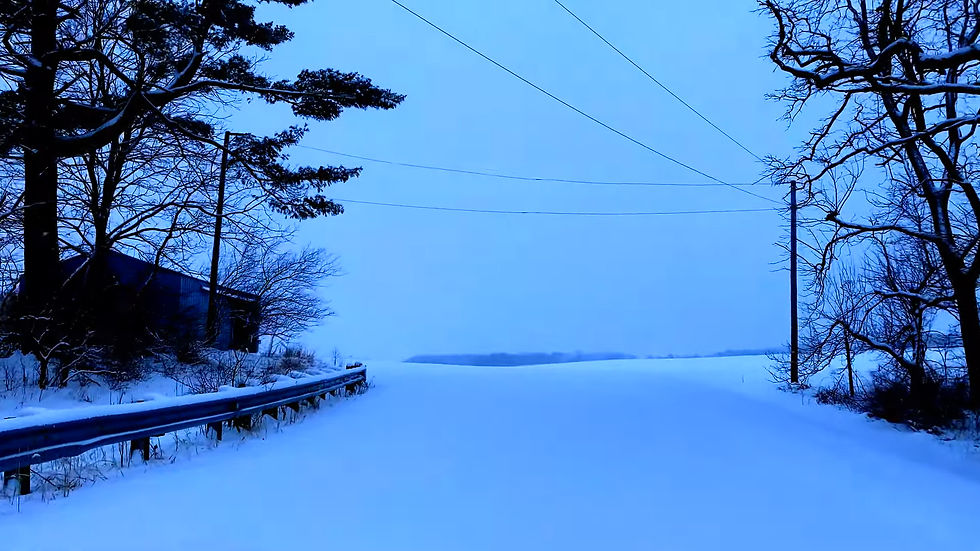
moving-image still of Hercules's Chalice
The ‘abyss’ could be interpreted as digital realms in Mari Amman’s moving-images and the integration of the self to digitized interfaces. Suffering through sequences in Hercules’s Chalice and Solfege Souche denotes a courage of being ‘forced’ to face the abyss, even when not directly confronted with imminent danger.

moving-image still of Hercules's Chalice
Through these celestial dances which invoke both the earth and metaphysical ‘heavens’, Mari Amman alters perceptions of reality into wind-chimed alterations, morphology of multiple dimensions of consciousness into ruminations of solitude, invocation, contemporary ritual, and enlightenment. These performances, and the figure, is a channeling of feminine connections to nature and bodily form, a rejection of artificial control with a plea to nature and the atmospheric winds to free us from imposed tyranny pertaining to those disconnected to our reflective autonomous essences.

moving-image still of Solfege Souche
Out of all four of these moving-image projects, Hercules’s Chalice is the most impactful and Body Line is the most hypnotic and hallucinogenic. The illusion of floating or walking on water and the ritual of bending water as well as the self, contains a connection to removing earthly obstacles in order to connect towards a greater metaphysical purpose outside of our physical limitations. Hercules’s Chalice is literally the most effective moving-image I have ever seen. Ironically, there is no blood, nobody dies, and no dialogue. Whether you are aware of the direct mythological references or not, the notion of trekking through a winter wasteland for almost ten minutes devoid with nothing except an island of trees in the distance, creates an intense sense of anticipation. When Mari finally reaches the ‘oasis’ of barren trees, on the other side, as she continues walking, is the cessation of hope. On the other side of this expanse of snow-filled bleak landscape…is even more snow, an unending horizon of desolate nothingness. This sense of nihilism and lost anticipation reveals how some obstacles are far too great for even the greatest of us to conquer. The notion of not being able to control your autonomy, no matter how hard you try, is what makes Hercules’s Chalice such a terrifying experience.

moving-image still of Afjordance
Body Line enhances our perceptions to what a moving-image can achieve, as environments turn into illusory ‘tools’ which can be manipulated to bend dimensions to Mari Amman’s will. She redefines the feminine form as a sentimental-like entity which defines and is at one with nature, outside the confines of fertility and sexuality. The hypnotic dances and poses are a sequential release of tension to earthly constraints, be they based on gender connotations or metaphysical planes and dimensions.
In summary, the moving-images of Mari Amman are complex narratives in questioning our collective and individual sense of purpose within the constraints of globalized industries and digitized realms. Our profound disconnect with nature becomes further realized in these Mari Amman moving-image projects which instill philosophical musings on defining individuality and self-essence within the machinations of digital chaos and imposed constraints from globalized institutional expectations and formalities. These restraints become released or accentuated in the moving-images, as Mari Amman provides a path for our deepest yearnings towards bodily autonomy and conceptual freedom.
___
Citation:
Nietzsche, Friedrich Wilhelm. Thus Spake Zarathustra: A Book for All and None. Project Gutenberg Press.
The University of North Carolina at Chapel Hill. 1999. ISBN: 979-8-238-01998-7
Moving-Image Links:
Body Line: https://www.youtube.com/watch?v=Tt8wNNNzq0Q
Hercules's Chalice: https://www.youtube.com/watch?v=7rQFMPMZYac
Afjordance: https://www.youtube.com/watch?v=LBVZrbWJfqw
Solfege Souche: https://www.youtube.com/watch?v=5o9Gzkxc8ps