
Why Performative Photography Matters: featuring Damira Tagaeva

There is a growing trend by some platforms, especially photography platforms, to label art which is performative as 'sentimental' or 'not grounded in reality'. These same outlets also urge artists to 'practice restraint' Hypocritical. An art platform can't claim to accept experimental practices and conceptual art while at the same time urging artists to follow the formulas of the past and 'restrain' themselves. Art cannot be increasingly conceptual without removing restraints and incorporating integrative as well as interdisciplinary practices, such as performative and theatrical traits or combining media. Anyone who claims otherwise has never done serious artistic research into contemporary art outside the mainstream. At Point Pleasant Publishing, we believe contemporary art needs to move past technique and design principles. We actively try to push the boundaries of contemporary art, which is why we focus on experimental practices such as performance, photography, video / film, fashion / costume design, installation, fiber / textiles, light design, etc.

We will find there are two types of curators / arts administrators. The ones who are looking for art which fits a particular formula or their definition of familiarity. In essence, these individuals are seeking ‘safe art’. Work which doesn’t ‘shake the boat’. Then there are curators / arts administrators who are genuinely looking for originality and have a criteria and curatorial standard based on merit rather than academic and institutional formalities. Performance remains at the helm of the avant-garde in contemporary discourse because much of the practice is drenched in social references and applications due to being figurative and often incorporating props and / or set design. For example, in the photographic works of Damira Tagaeva, she utilizes theatrical and cinematic sequences with actors which indulge in the most sensitive sensory experiences of the mind; such as horror, erotica, crime, fashionable vanity, witchcraft, and an air of mystery.

Accentuating performative qualities in visual art across disciplines only leads to positive results because interdisciplinary practices are increasingly conceptual in comparison to singular and traditional art forms. Who needs tradition anyway? Tradition has usually been associated with rewarding the well-connected and artists with a name brand. Artists are not a brand and artworks are not meant to be cheap commodities designed to compliment your furniture, which is why design principles have become largely irrelevant in the post-contemporary digital era.

What makes Damira Tagaeva such a complex artist is not only her ability to integrate performative elements into her work, but also apply connotations of fashion, costume design, and a snide attitude towards her presentation. Damira’s use of analogue digital alterations in some of her works are not designed to dilute the original captured effect, but rather add a paranormal, enchanted, or hallucinogenic perception to the performance of the photography. Her actors and models are vivid, lucid, and have a life essence which engages with the specific theme Damira directs, whether based in horror, erotica, or mafia-type narratives.

The problem with ‘grounding art in reality’ would be actuality is quite boring and extremely repetitive and redundant. There are only so many ways you can capture a flower or a typical landscape. But incorporating integrative and interdisciplinary methods into a work of art, especially performance or combining media, leads to results which is conceptual, complex, and provides a narrative work worth writing and talking about. Such an approach leaves art from ‘this is beautiful’ to being able to have an entire 1200 word essay written about the piece. Arts writing cannot be faked as discussing a bad work of art leads to a poorly written essay, even with perfect grammar and well-intended analysis. You can almost break down arts writing into a science, because genuinely complex works of art, such as performative photography, leads to dialogue which is engaging and unfolds a narrative which has real world connotations and symbolism with sociological implications and beyond.

Damira Tagaeva, like an inspired theatre director, approaches the craft of photography much like a philosophical muse. She constructs a sense of complexity based on themes which provoke emotions based on sly and ‘forbidden’ passions. These elaborate photographic works enhance our imagination and move our thoughts beyond familiarity and real-world references. Like fine literature, she weaves a narrative frozen within a singular moment within her frame, which can be contemplated for hours at a time. She exemplifies as to why performative elements and photography go hand-in-hand, because there is a sense of relating the actors through the realism of the medium but with alterations and infused imagination which cause illusory manipulations.
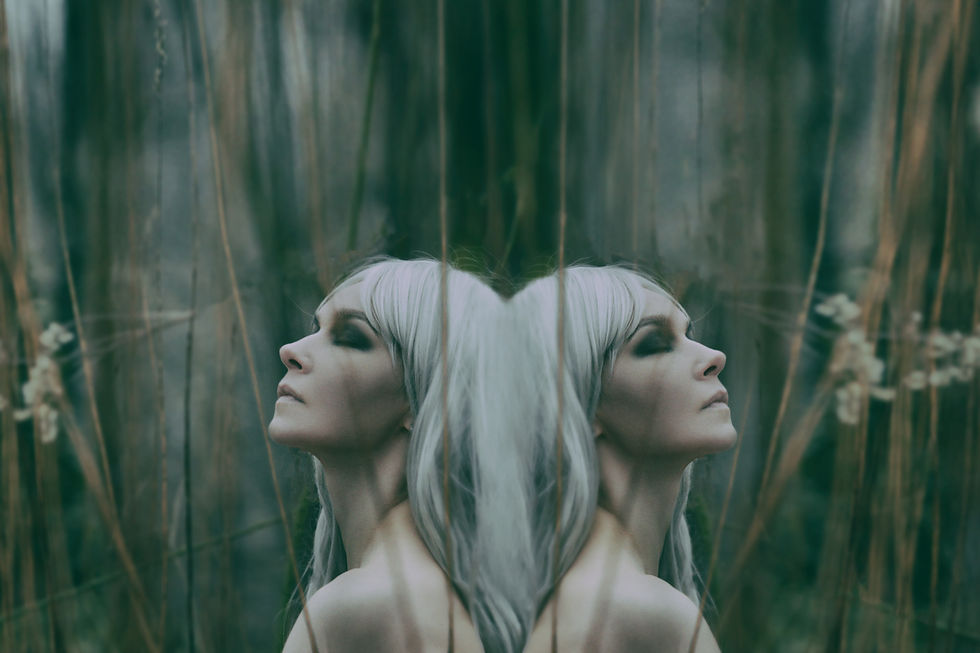
In essence, Damira has us rethink how we approach particular narratives through certain angles, such as portraying a woman with an ominous luxury car following her in an industrial park, blurred in depth of field with headlights on, or a witch ‘burning’ the corner of the photograph with solar rays from her hand. Damira Tagaeva’s imaginative and integrative approaches are sorely needed in the visual arts today as artists very often observe reality but are too timid to bend and manipulate actuality to the whims of their imagination or empowered will and desires. Art should communicate, not simply observe or act as a presentation based in simplicity and pretentious false connotations based in repeated formulas and familiarity.


