Ziyu Wei

Ziyu Wei is a documentary photographer who has exhibited recently in Espacio Gallery and The Koppel Project in London, WPAC in Wuhan, China, and ARS ELECTRONICA CENTER in Linz, Austria. Her biography describes the work as “rather than offering straightforward representation, Wei’s images function as emotional architectures, tracing the residues of desire, anxiety, and tenderness that define modern existence. Within these shifting spaces, she reflects on how human vulnerability endures amid systems of order, technology, and consumption, transforming fragility into a site of awareness and renewal”.

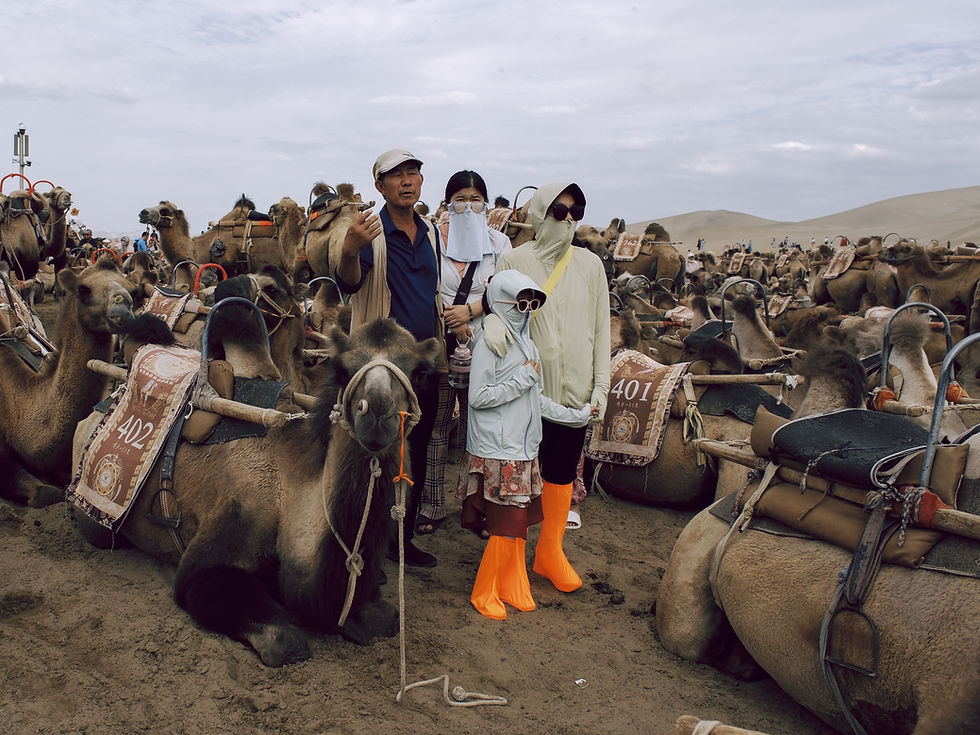
The documentary photography of Ziyu Wei typically depicts aged and ancient environments. She captures ancient castles out in the desert planes of China as well as the migration of nomadic figures across the baren landscape. Through these experiences we are made aware of mindful interactions and surfaces. In the photography, we will find cropped compositions of ancient interiors, murals, and sculptures, often in low-light. Also, we will find the remote landscapes which encase these shrines indicating a sense of isolation and solitude.

In these dynamic photographs, Ziyu Wei conveys documentary approaches to rejuvenated aspects towards structural artifacts. These ancient structures and mysterious landscapes call upon us to reconsider our surroundings and implore a sense of yearning for travel and escapism. Ancient environments are captured in naturalistic light and in a documentary manner to reveal not only wisdom of the past but also eternal philosophical and poetic inclinations in understanding of time and space. The poetry of these photographs reveals a dichotomy between mindful awareness and reflections on the distant past creates realms of consciousness which expands expression beyond initial awareness.

V. 3 (pictured above) upon first impression may seem like a road but is in fact a caravan of nomads out in the open desert. The straight line and severe distance of capturing the subject reveals an elaborate culture being captured in a documentation of momentary time. This documentative photograph serves not only as a work of art, but also as a historical document on contemporary internal migration.

These enlightening photographs reveal poetic and philosophical purposes to identifying and documenting nomadic figures and isolated locations. Far removed from civilization, the photographs reveal realms of ancient structures and open plans of desert amidst the far cries and machinations of the city. We as the viewer embark on a journey through the whims of documentary photographs which reveal time and space being altered in low-light and natural light environments reflecting ancestors. Taken on a great journey, the viewer should embrace these compositions for their inherit historical and culture value as well as works of art which embolden the senses and has us contemplate on the past as well as the mindful present.