
Austin Lubetkin

Austin Lubetkin is an analogue digital collage / assemblage and new media artist as well as an experimental sculptor who has exhibited in major cities including Los Angeles, New York, and Tokyo. Recent exhibitions include multiple showings at TAG Gallery in Los Angeles, Sasse Museum of Art in Pomona, California, Tokyo Metropolitan Art Museum, Awita Gallery in New York, The Los Angeles Makery, Mount Dora Center for the Arts in Mount Dora, Florida, and Friends Art Gallery, Boca Raton, Florida. Austin has been published by notable publications and media outlets such as LA Weekly and PBS.

The new media artworks of Austin Lubetkin incorporate creating digital collages, usually using imagery which is figurative or symbolic of excess, and sometimes integrating paint into the digital collages, which makes some of them as digital assemblages. His experimental sculptures are print outs based on 3-D modeling and then fine-tuned and painted by hand. An overarching and lingering theme throughout Austin’s works is the excesses and overreach from corporatism and how finance, retail, and luxury branding creates false value systems. In essence, the artworks reflect the nihilism of corporate structure and the loss of individuality echoed within the blasting of mass media consumption. From comic book characters becoming motion-blurred and crushed with streaks of color indicating a vaporwave aesthetic to a figure tattooed with barcodes against a landscape of blank television screens to various parts of anatomy turned into dream-like structures replicating shopping malls and skyscrapers, the artworks speak volumes to the powerlessness within globalist structures.
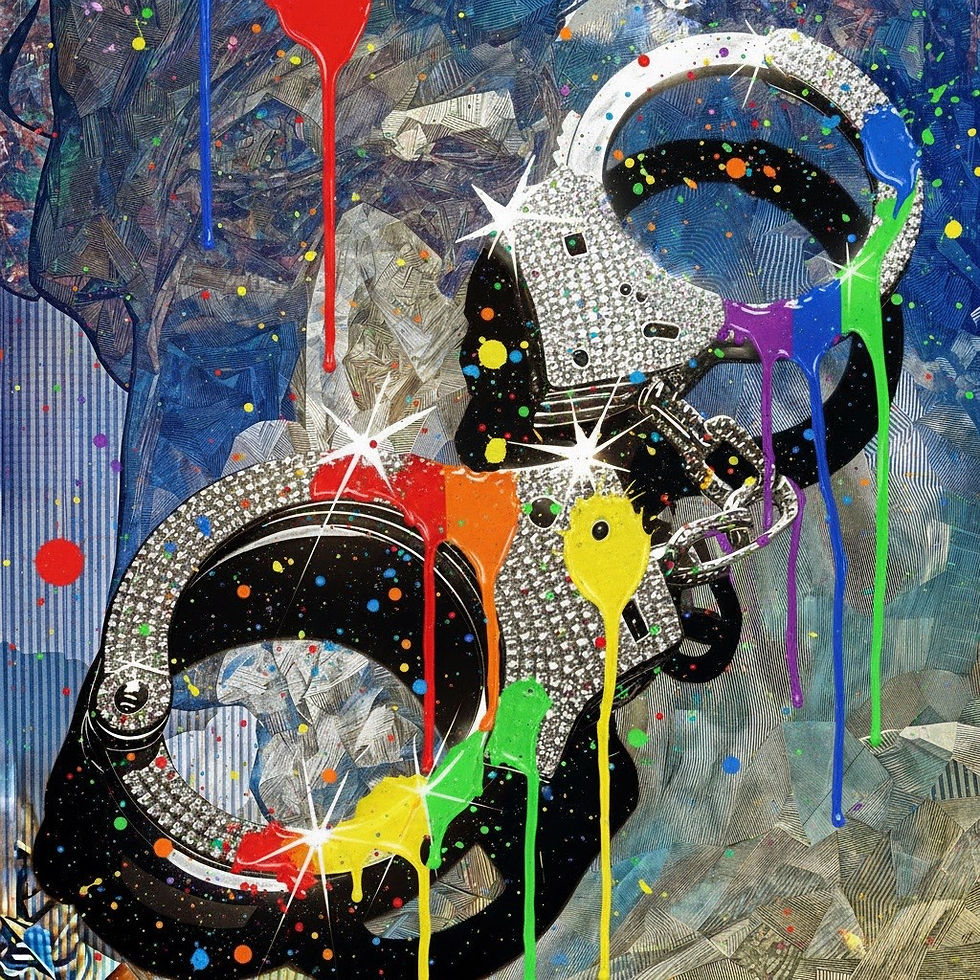
In all formats of Austin Lubetkin’s art, the figure or figurative elements are used to convey a nihilistic structure of luxurious excess through glitzy sparkles, pop-art-like colors, and centralized compositions reminiscent of graphic design trying to sell a product. These works have us question value systems and reveals the absurdity of contemporary versions of luxury, such as displaying a platinum, sparkling pair of handcuffs dripping with paint to a man being seemingly crushed in a motion blur of a giant stiletto fashion woman’s shoe. From lipstick escalators to a consistent vaporwave color schematic, Austin Lubetkin uses smooth surfaces and corporate as well as retail symbolism (such as barcodes) to reflect how individuality becomes erased through mass consumption and revolving our collective goals around attainment of superficial materialistic items. In essence, the art has us question value systems and implores the viewer to recalibrate their humanistic priorities against the excess and greed of retail.

Product Line (pictured above) reveals a woman portrayed from various angles. Her face is concealed and she is covered in bar code tattoos conveying a conceptual notion of loss of individual identity. The television screens in the background reveal a conceptual narrative as most of them are blank or showing electrical interference. If we pay attention to the TV screens to the left, we will notice a mouth expressing grit and a hand full of pills. Product Line suggests an altered state of mind based on stripped individualism and resulting in mental instability, as conveyed through the medication.

Through colorful streaks, motion blurs, pixelated surfaces, and painted or concealed faces, Austin Lubetkin expresses the contemporary age as a realm of superficiality and false dreams. His poignant symbolism and centralized compositions reveal a narrative conveying a sinister side to the aspects of retail, driven by greed and consumption rather than legitimate values or elements of substance. The viewer will notice the absence of nature within these works, conveying a world soaked in unnatural states of mind. Austin Lubetkin can be described as a conceptual artist who challenges contemporary value systems through integrative techniques with interdisciplinary applications of combining digitalized realms with collage and assemblage. These artworks are an investigative approach in how visual art evaluates systems and structures of utility, and humanizing elements of individuality amidst the sea of materialistic consumption.


