Todd Neal Jones Jr.

Todd Neal Jones Jr. is an assemblage and installation artist as well as a curator who has exhibited throughout the United States. Recent solo exhibitions include 934 Gallery in Columbus, Ohio, Diamante Arts and Cultural Center in Raleigh, North Carolina, Gallery 406 at Elon University in North Carolina, and 621 Gallery in Tallahassee, Florida. He has been published by Circle Foundation for the Arts, Tallahassee Democrat, and Columbus Monthly. Todd’s recognitions include the Pauline Davis Perry Award and Janet Link Meredith College Scholarship.
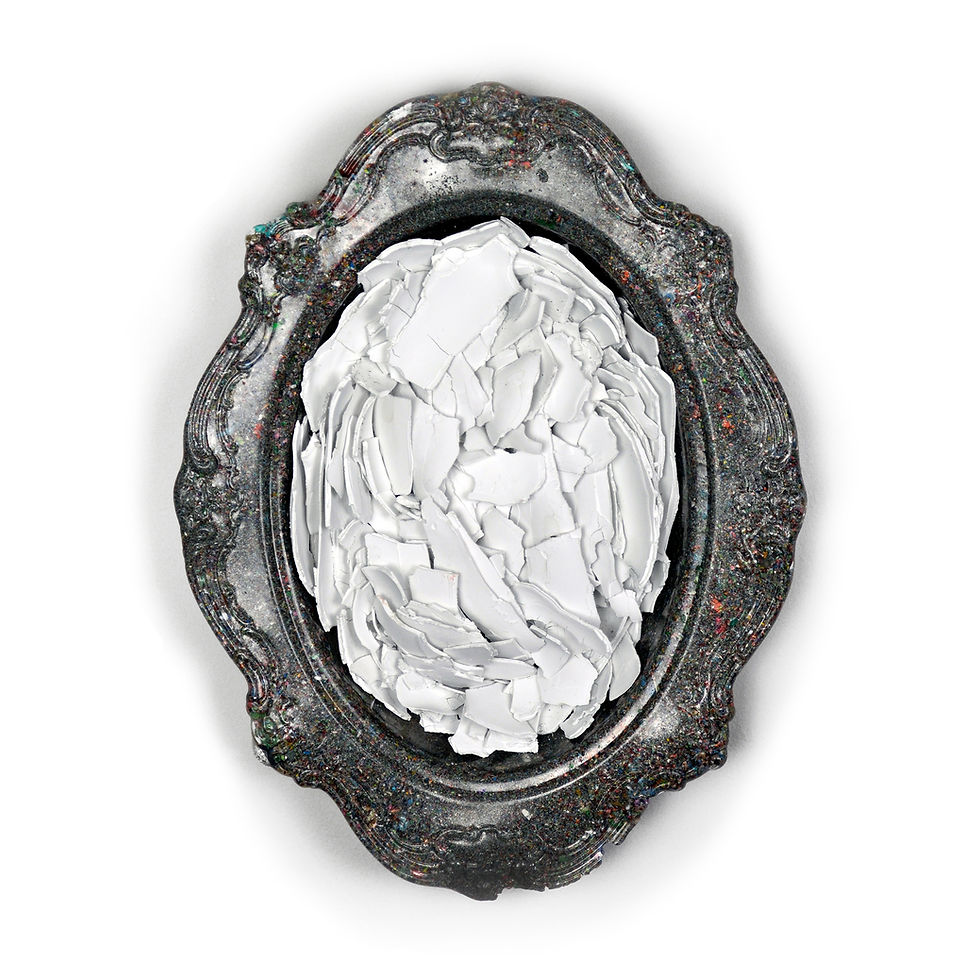
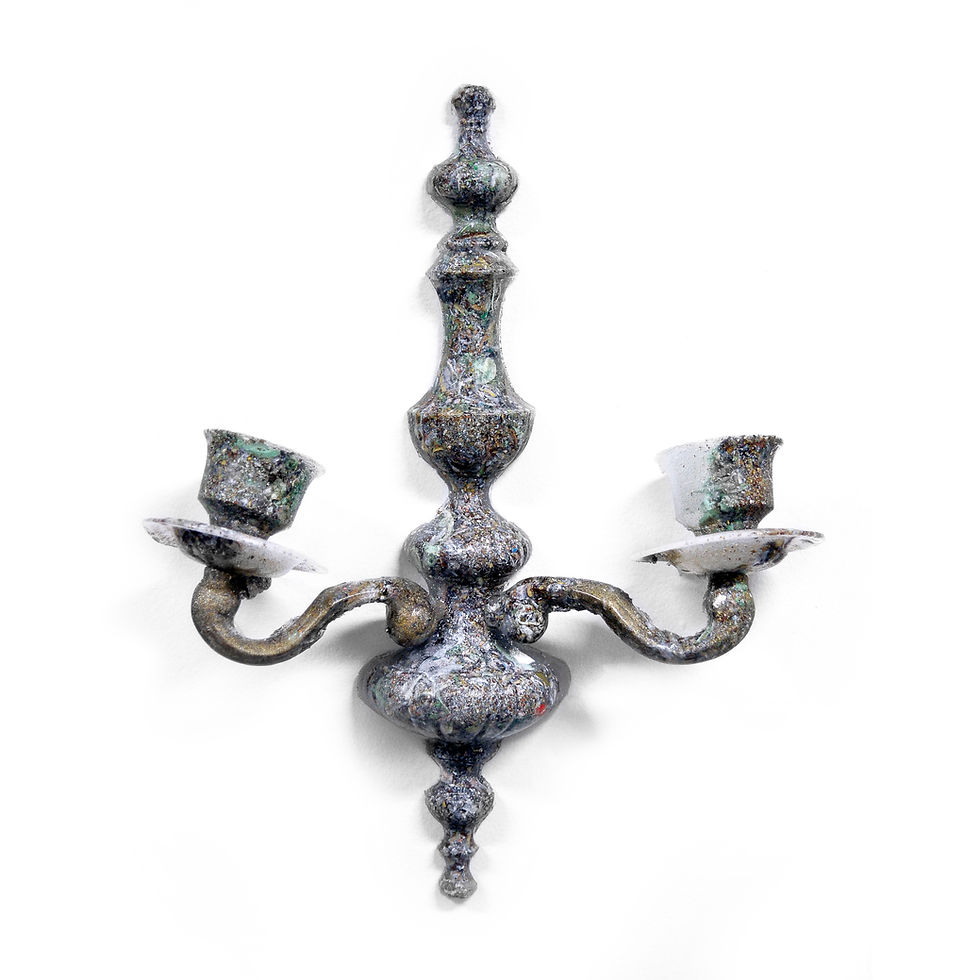
The assemblage and installation works of Todd Neal Jones Jr. primarily deal with assembling three-dimensional constructs based on salvaged materials, particularly mistinted paint, for which he dries into strips, blocks, and organic / structural shapes of forms. The conceptual purpose of creating assemblages out of discarded paint is based on transferring literal garbage into structures which have intrinsic value, such as creating installations which resemble ornamental antiques or fine linen fabrics. Some of Todd Neal Jones Jr.’s most fascinating assemblages are of his constructions of entities which resemble French Rococo or Victorian mirrors or antique furniture. These mirrors and antiquated devices do not so much appear like replicas, but rather loosely inspired by these configurations. As a result, many of these items can come off appearing like the vanity mirror of a wicked sorcerer, witch, or necromancer, complete with dark Gothic colors, patterns, and silvery sheen combined with globs of resin which seem like portals to otherworldly dimensions.

Assemblage is a very interesting application, especially when dealt with recycled, refurbished, or jury-rigged materials. Todd’s fascination with paint as a three-dimensional device can come off as an indirect criticism of painting as a restrictive artform. In other words, he applies conceptual context to paint through reconstruction and three-dimensionality which would not otherwise appear alone as a two-dimensional substance. The ornamental and structural creations from these slabs of dried paint create lucid color patterns which are often conceptually applied to the assemblage, such as a hallucinogenic linen towel on an installation resembling a towel stand in a bathroom. In essence, Todd Neal Jones Jr.’s conceptual approach is based on a social commentary reflecting materialism and intrinsic value. He chooses construction material which has been purposely discarded simply because the tint of color is slightly off from what the customer intended. As a result, the paint is regarded as worthless trash for which Todd transforms into priceless works of art through transformation into ornamental interpretations.

Oculus (pictured above) best exemplifies with enchanted mirror-like antiques which seem inspired by Gothic, Victorian, and Rococo design elements. This haunting mirror, complete with dimensional portal-like resins creates a surface for fantastical connotations and patterns which are unique to the artist but inspired by the past. The artist’s ability to transform literal garbage to refined objects is a deep conceptual context on materialism and value.

With a practice dedicated to applying conceptual and sociological connotations to found objects as well as the artforms of assemblage and installation, Todd Neal Jones Jr. applies a narrative based on imaginative conversions and transformation. He uses paint as a sculptural device rather than as a smeared pigment onto a surface, for this, the substance becomes adjacent to mediums such as clay, marble, or plaster. Todd converts waste into structures and objects which are entirely of his own design yet inspired by the past, converting ornamentally-inspired patterns and items into instances of high art and conceptual contexts regarding valuable transformation.